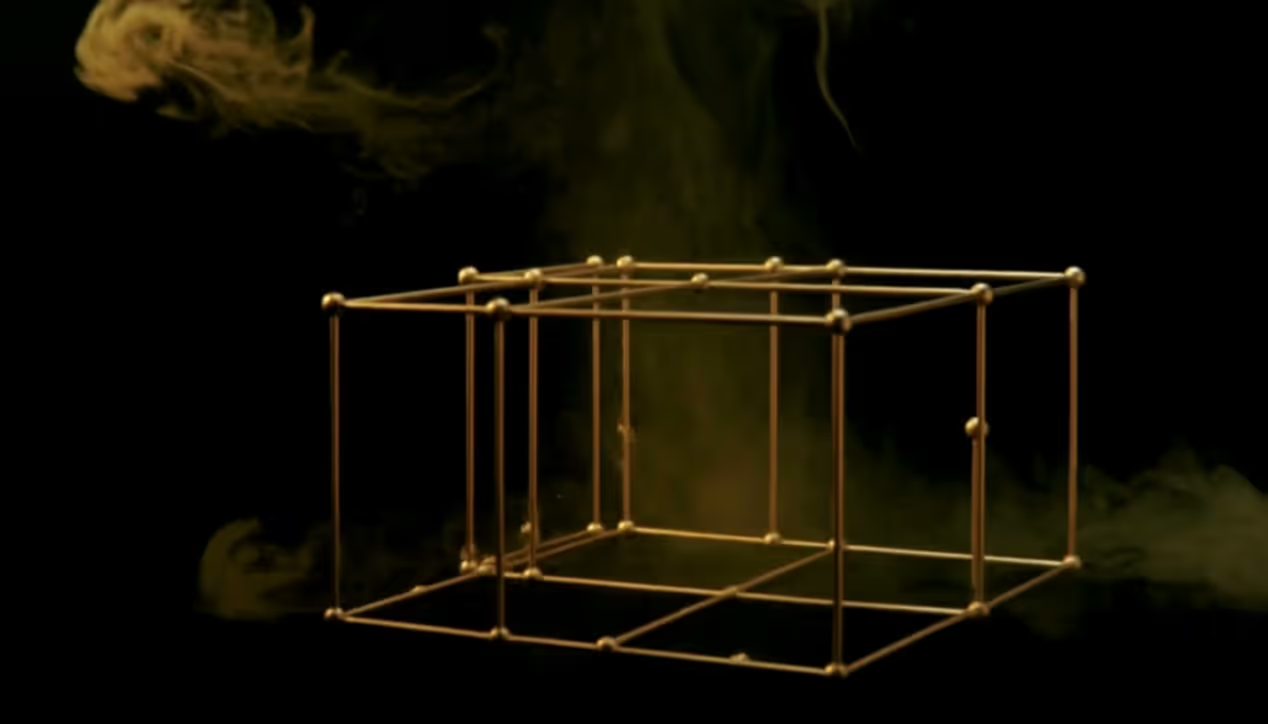


SHT-01Assembly sequence

Four steps, in order, and nothing starts before the one above it.

A website is 10 to 14 days from approval. A custom system is a longer, deeper build, scoped individually before anything is written. What follows is the same sequence either way, and the difference is only how long step three takes.

SHT-02Assembly sequence · detail

What each step actually consists of.

The short version lives on the homepage. This is the long one, written so there is no surprise about who does what, and when.

  1. 01 · Step 1

    Audit

    We look at where the work actually leaks: the lead that waited, the quote nobody chased, the number typed twice.

    • You send the site and a sentence about what you would most like answered.
    • I walk the funnel the way a buyer would: submit the form, wait for the reply, watch what happens to that lead.
    • I record what I found as a short video and write the same findings down, so it can be forwarded to whoever runs your operation.
    • Nothing is owed at this point and there is no call afterwards unless you ask for one.

    Output
    A recorded walkthrough and the same findings in writing.

  2. 02 · Step 2

    Draw

    Scope locked in writing, priced before the build. Add-ons are re-quoted, never quietly absorbed.

    • We agree what the thing has to do, in the language of your business rather than in features.
    • The scope goes in writing: what is in, what is out, and what would count as done.
    • It is priced against that document before a line is written, so the number does not move underneath you.
    • Anything added after this point is quoted as its own item. Absorbed work is how a solo build slips, so it does not get absorbed.

    Output
    A written scope, priced, with the exclusions named out loud.

  3. 03 · Step 3

    Build

    Weekly review call, asynchronous between. You see the thing running, not a status update about it.

    • One review call a week, on the running build rather than on a document about it.
    • Between calls the thread stays written, so a decision can be read back later instead of remembered.
    • A website reaches this stage for 10 to 14 days from approval. A custom system stays here longer, and how much longer was settled in step two.
    • Feedback is bundled into a pass rather than applied one message at a time, which is what keeps the build coherent instead of patched.

    Output
    A working build you can open on your phone, reviewed weekly.

  4. 04 · Step 4

    Hand off

    You own the code and the database. Training on video, kept for whoever joins next.

    • The repository, the database, and the payment account are yours and were yours the whole time.
    • The domain is pointed, SSL is configured, and the lead route is tested by actually sending a lead through it.
    • Training is recorded rather than delivered live once, so the person who joins in six months gets the same explanation you did.
    • If the working relationship ends here, nothing switches off.

    Output
    Ownership, a tested lead route, and recorded training.

SHT-03General notes

The rules that make a one-person studio finish things.

These exist because a solo operator has no slack to absorb a moving target. They are stated up front so nobody has to discover them mid-build.

N01

One point of contact

The person you message is the person building it. No account manager, no junior, no handoff between them.

N02

Locked scope

What was written down is what gets built. Change is welcome; it is quoted rather than assumed.

N03

Weekly call, written between

The call is for decisions. The written thread is for everything else, and it is the record if memories disagree later.

N04

Bundled revisions

Feedback is collected and applied as a pass. A build changed one message at a time ends up as patchwork.

N05

Your accounts, from day one

The database, the repository, and the payment processor are registered to your business, not to the studio.

N06

A no is a real answer

If the audit says your problem is not a software problem, that is what the audit will say.

SHT-04Schedule of works

What is handled without being asked.

This is the part that usually surprises people: the unglamorous items below are inside the build rather than billed as extras afterwards.

01Copy written from the trade
Headlines, service descriptions, and calls to action written from how your buyers actually search and what they need to see before they pick up the phone.
02Built on a phone first
Designed and tested on a phone on a weak signal, because that is where a local search usually happens and where a slow page loses the lead.
03A lead route that is tested
The form writes the enquiry into the system as a record. Before launch, a real lead is pushed through it end to end to confirm it arrives.
04Technical and local SEO foundation
Titles, headings, schema, indexability, and Google Business Profile alignment set up at build time rather than retrofitted later.
05Domain and DNS
The domain is connected and SSL configured. If you already own the domain, that needs about fifteen minutes of registrar access.
06Recorded handover
A short video on how to send an edit, where the leads land, and what to do if something looks wrong. Kept, not delivered once.

SHT-05General notes · questions

Asked before every build.

N01Do I need photos and copy ready before we start?
No. The copy is written from what you tell me about the business. Photos help if you have them; where you do not, the build uses imagery that fits the trade and the market.
N02What if I want changes after the first draft?
Expected. Feedback is bundled into a revision pass so the build stays coherent. Changes inside the agreed scope are part of the work; anything outside it is quoted as its own item before it is started.
N03How is a custom system different from a website?
A website is 10 to 14 days from approval because the shape is known before it starts. A system is scoped individually: the stages, the pricing rules, and the documents are yours, and none of them can be guessed in advance.
N04What happens after launch?
You own the code and the database, so nothing depends on the studio staying. Ongoing support is arranged separately and is never a condition of the build.
N05Who connects the domain?
I do. If you already own it, I need registrar access for roughly fifteen minutes. If you do not, I will recommend one and register it for you.
N06Can this run in Russian?
Да. Полная русская версия сайта живёт на /ru, и проект можно вести на русском от первого письма до сдачи.

SHT-08Issued for construction

Start with the audit.

A short video walkthrough of where your lead flow leaks and what it would take to close it. Free, and there is no call afterwards unless you want one.

Get my free audit